Ingredients and timings
For four portions, prepare 500 g of carrots, one medium onion, one garlic clove, 240 g of already cooked and drained chickpeas, two tablespoons of olive oil and 900 ml of water. Add salt and pepper to taste and chopped parsley for serving if desired. Allow ten minutes for preparation and around twenty-five for cooking. The chickpeas must already be cooked: this timing does not allow for cooking dried chickpeas.
Prepare the vegetable base
Wash and peel the carrots and cut into small rounds. Peel and chop the onion and garlic. Heat the oil in a saucepan and cook the onion over a medium heat for around four minutes, stirring. Add the garlic for another minute without letting it darken. Add the carrot and stir. Similar-sized pieces help cooking become more even and make the final check easier.
Cook and blend carefully
Add the water and half the chickpeas. Bring to the boil, reduce the heat and cook for approximately twenty minutes, until a fork easily pierces the carrot. Remove from the heat and blend with a hand blender, keeping the blade submerged to prevent splashes. Adjust the texture with a little hot water if needed. Add the reserved chickpeas and return to the heat for around three minutes to warm everything through.
Season and serve
Taste before adding salt, particularly if the chickpeas or any stock used are already seasoned. Divide between four bowls and finish with parsley and pepper if you like. For a thinner consistency, add water gradually. For a thicker texture, begin with less liquid and adjust at the end. Avoid compensating for overly watery soup with excessive seasoning: adjust the consistency first, then taste finally.
Variations that respect the recipe
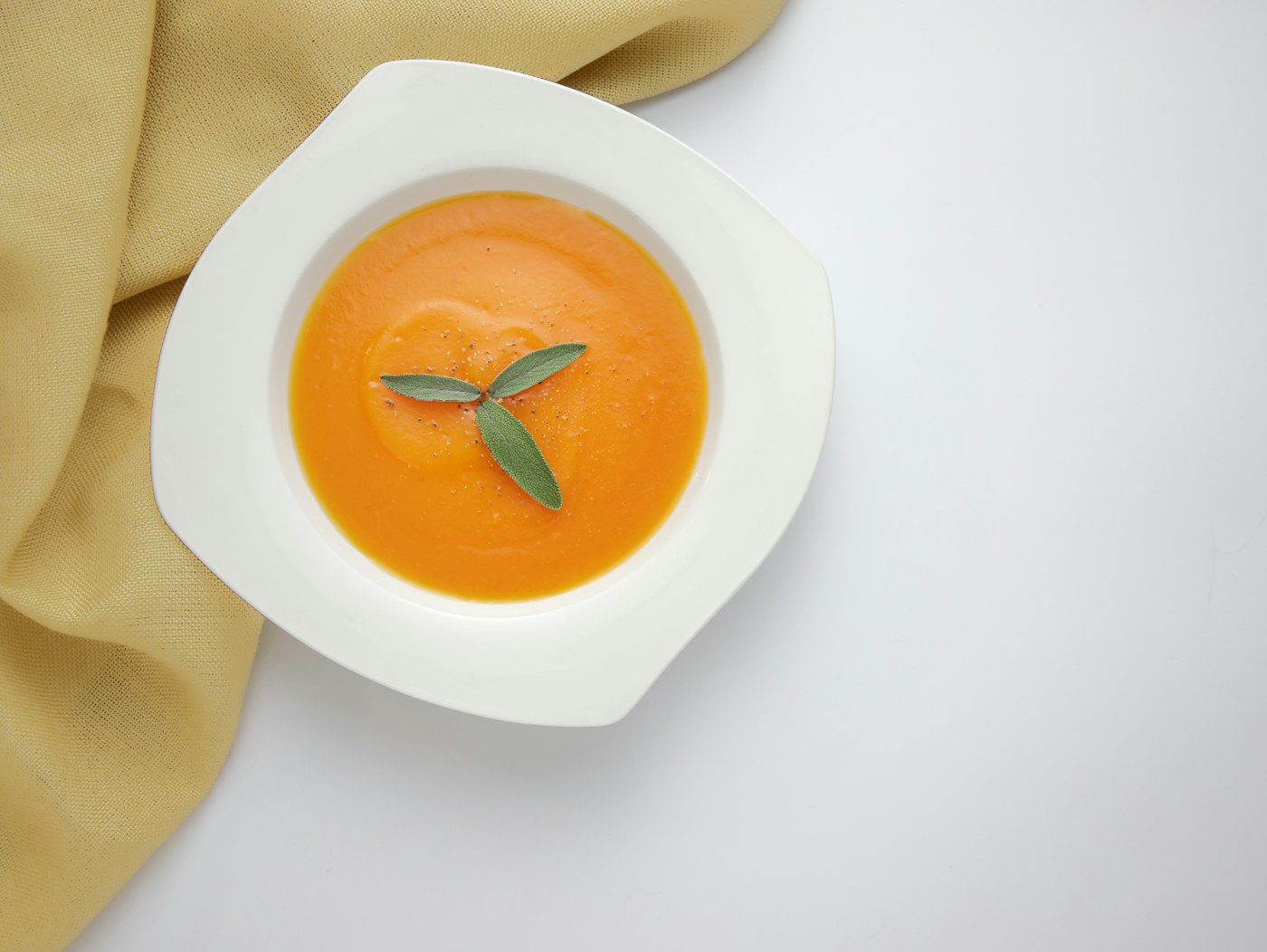
Replace some carrot with pumpkin or add a little cumin during cooking. These changes alter the flavour, so try one at a time. For completely smooth soup, blend all the chickpeas. To serve as a meal, accompany with bread or another addition you prefer. The photograph is illustrative; colour and thickness vary with ingredients and the final quantity of water.